Google DeepMind
Google DeepMind's work advancing AI across the sciences, opened with a film set inside a Cambridge lab.
- Client
- Google DeepMind
- Year
- 2026
- Key visuals
- Motion

Antimicrobial resistance is a silent pandemic: bacteria are outpacing the development of new antibiotics, and a routine infection can quickly become life-threatening.
In the film “Using AI to outsmart drug resistant bacteria”, a team at the University of Cambridge pairs structural biology with AI tools like AlphaFold, Gemini and Co-Scientist to decode how bacteria defend themselves. A process that took years now takes minutes.
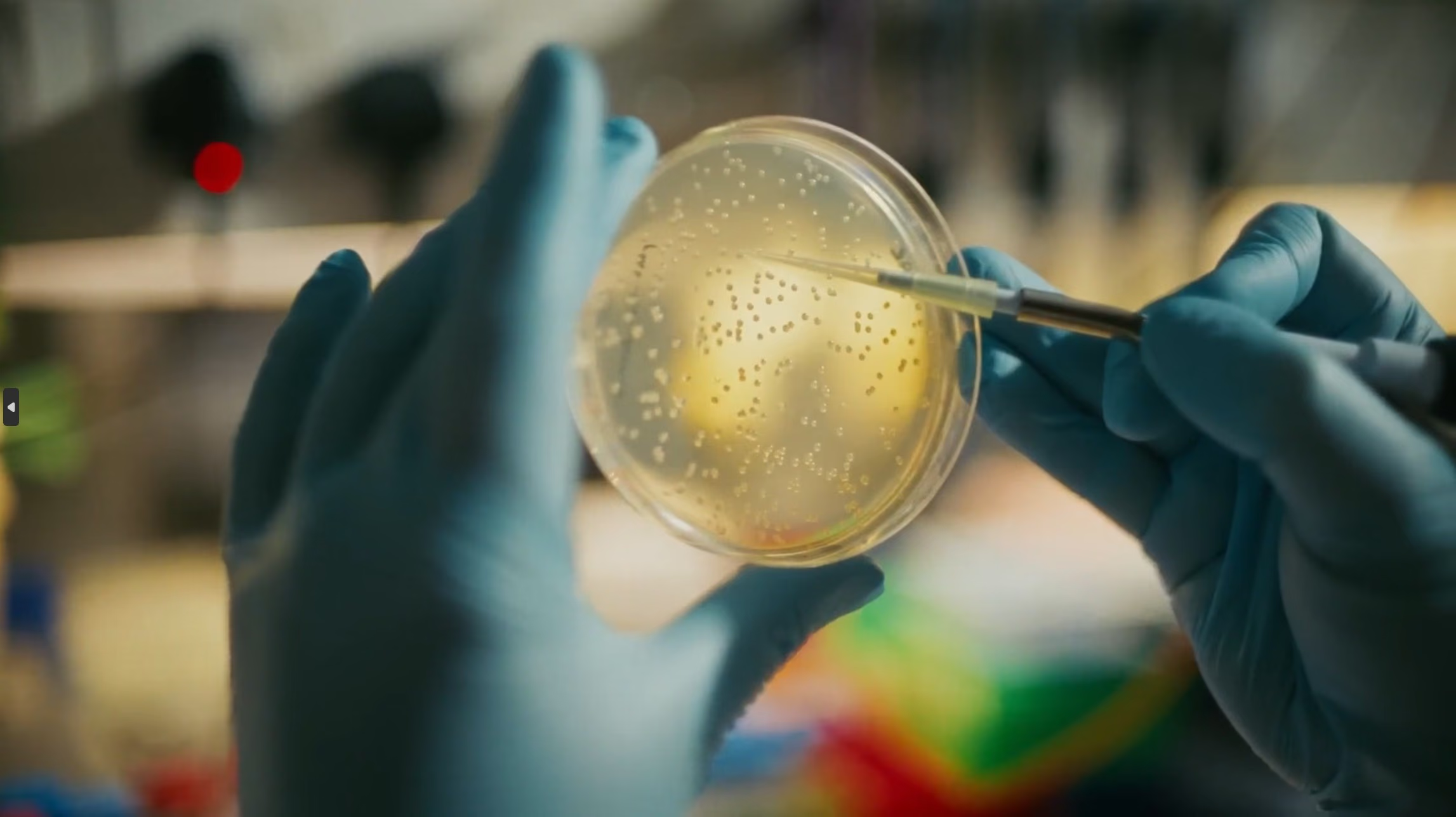
Gramafilm made the film. I was tasked with its whole intro: the petri dishes, built in CGI, that start the story inside the lab.
The vision
An opening that puts the viewer inside a Cambridge lab.
The directors wanted us to feel the lab, so they drove the animation with the rotating motion of a microscope, as if we were switching lenses. It is a POV from the eyepiece, watching bacteria grow in a petri dish.
A few shots of the Google film set the ambience and art direction, so it is clear why the animation fits.
Custom dish, real bacteria
Merging digital footage with real time-lapse footage.
We built a custom model of the petri dish. The hard part was shading real footage onto it in 3D: convincing enough to keep the illusion, and efficient enough for the timeframe. We sourced the footage, blocked it in, and rendered it as a custom material in Houdini, with each time-lapse speed-matched so the intro sits seamlessly in an existing universe.
Overview
The sequence at a glance.
Still live
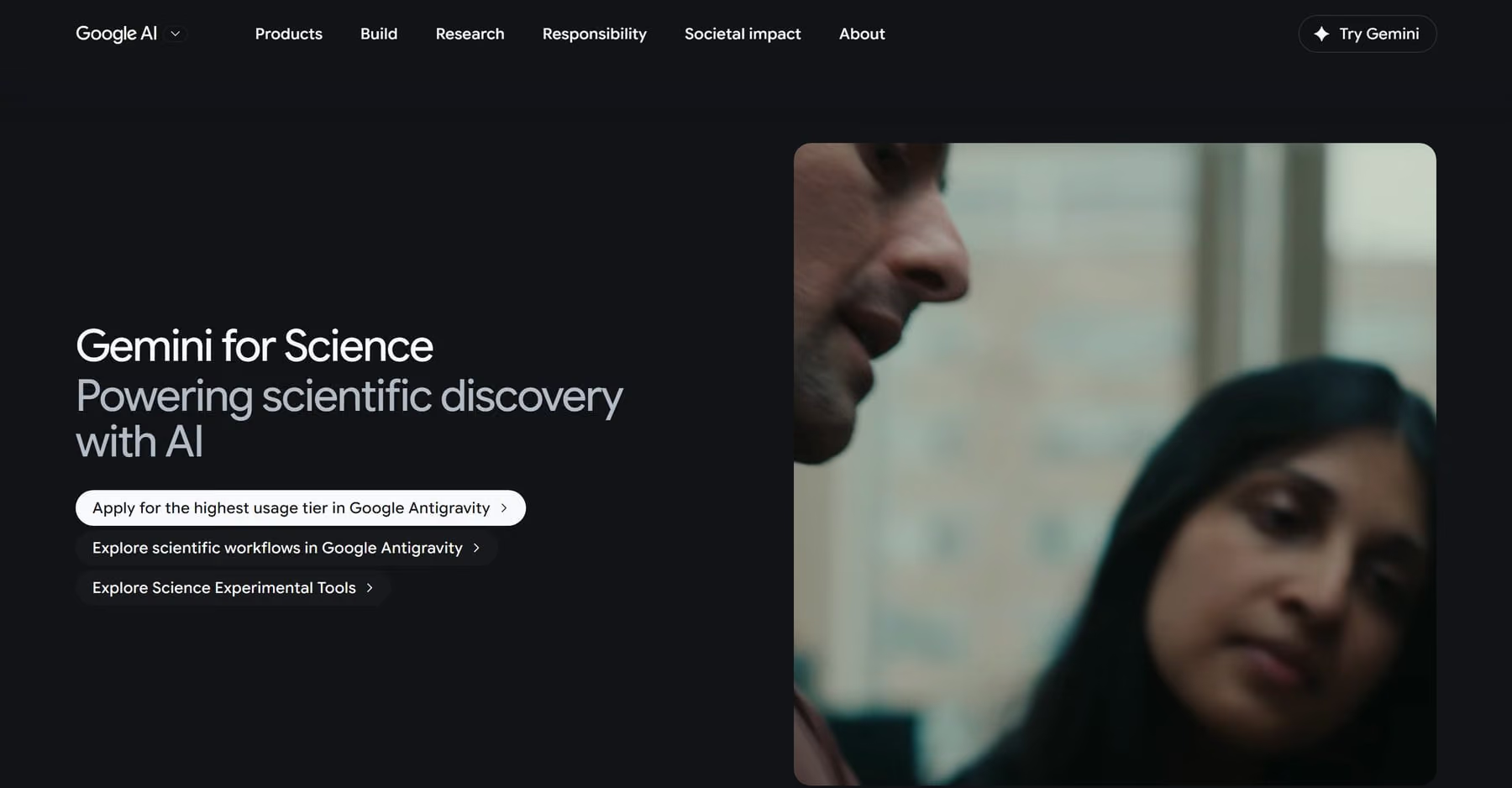
The film is now a long-lived asset on Google DeepMind’s landing site.
It lives on the Gemini for Science page, playing at the very top as the first thing you see.
Credits
Full credits, Gramafilm